The Power of Local SEO for HVAC Businesses: Dominating Your Service Area

Chris Smith • November 21, 2023

For any local HVAC business, establishing a strong presence in the community is paramount.


Whether you’re a renowned HVAC franchise, a growing agency, or an independent contractor serving specific or multiple areas, the power of local SEO for HVAC businesses cannot be underestimated.


A robust local SEO HVAC strategy is your ticket to generating leads and securing more jobs throughout the year. 


SEO for HVAC contractors not only boosts traffic, but also enhances your conversion rates by connecting local customers directly through search engines. 


Ready to dominate your local HVAC market and capture the attention of homeowners? Let’s find out how to grow an HVAC business through effective HVAC SEO marketing.


What Is Local SEO for HVAC Businesses?


Local SEO for HVAC businesses involves optimizing your website for higher geographical search engine rankings. This comprehensive strategy employs various tactics, such as local citations, a robust Google Business Profile page, and an optimized HVAC online presence. 

The goal? Securing a prominent place on the first page of Google Maps to capture the attention of potential customers in your service area.


By excelling in local SEO, your HVAC business can not only enhance its online presence, but also attract vital “near me” searches. This is crucial for the growth of HVAC companies looking to increase revenue in their local areas.


Benefits of Local SEO for HVAC Companies 


Local SEO for HVAC offers a tailored approach to connect with customers actively seeking your services – the elusive qualified leads.

Here are a few key advantages of implementing HVAC SEO services.


I. Cost-Effective Promotion


HVAC SEO directly targets users in need of your products and services, eliminating the need for expensive outbound strategies like cold-calling. It’s a great way to save money, while achieving results.


II. Enhanced Visibility


A well-optimized HVAC website will consistently appear on Search Engine Results Pages (SERPs) each time a user searches online. This means more clients will recognize your company, solidifying your position among the top HVAC companies.


III. Surpassing Competitors


With a strong local SEO HVAC strategy, you can outdo your competitors in local searches like “HVAC services in X city.” This local visibility can give you an edge.


IV. Boosted Sales and Conversions


When a potential customer finds your business online and visits your website or contacts you, there’s a substantial chance they’ll become a client. Local SEO HVAC is your ticket to an enhanced client base and revenue.


V. Trust and Loyalty Building


Local SEO strategies emphasize the generation of online reviews. When potential customers see a multitude of favorable reviews, they’ll be naturally inclined to trust your HVAC services.


VII. Measurable Results


Say goodbye to guesswork – with local SEO, your strategy is informed by data, ensuring tangible results in your quest to grow your HVAC business.


Wondering what it takes to excel at local SEO for HVAC agencies? Read on to learn about some factors that play a crucial role in this regard.


Keyword Research and Optimization


When it comes to HVAC SEO, local keyword research takes center stage. Mentioned ahead is a step-by-step guide on how to perform effective local keyword research for your HVAC business.


1. Build Your Keyword List


Start by listing your HVAC products and services. To cater to local search intent, add modifiers like “how,” “hire,” “buy,” and “get a quote.” Incorporate location-specific terms such as “nearby,” “near me,” and the names of neighborhoods, towns, or cities you serve. Experiment with these variations to create a robust keyword list.


2. Gauge Search Volumes


A keyword’s popularity is determined by the estimated number of searches it receives over a specific period. Prioritize keywords with higher search volumes, as they are more likely to attract interested customers. 


3. Analyze Local Competitors


Investigate the keywords they target, as this insight can inform your HVAC SEO campaign strategy. By understanding their approach, you can fine-tune your own to outperform them.


4. Confirm Local Intent


When researching keywords, check if they yield local search results. If a keyword doesn’t trigger local SEO results, it may not drive the desired traffic. 


Google Business Profile Optimization


A crucial aspect of HVAC SEO, Google Business Profile (GBP) helps users easily find your services in various search queries. Here’s how to harness its potential to stand out in local results:


  • Start by creating a Google Business Profile account, providing essential information about your HVAC company.
  • To enhance your HVAC SEO, infuse your GBP listing with relevant keywords and phrases such as “air conditioner repair” or “heating installation.” 
  • Choose “HVAC Contractor” as your primary category, aligning your profile with your core service offering.
  • Select additional secondary categories that align with the HVAC services you offer.
  • Clearly specify the geographic regions you serve to ensure potential customers know your coverage areas.
  • Ensure that the phone number on your GBP listing matches the one displayed on your website.
  • Include your website URL on your GBP profile and incorporate the Urchin Tracking Module to monitor your site’s monthly traffic originating from your GBP listing.
  • List all the services your HVAC business provides, offering Google and potential customers a comprehensive understanding of your offerings.
  • Leverage your business description to incorporate relevant HVAC SEO keywords and utilize the available space to its fullest. This helps your GBP profile appear in more search results.


It’s a good idea to collaborate with an HVAC SEO agency to craft detailed descriptions rich in keywords and content. This approach will streamline user access to crucial information, presenting a clear snapshot of your business, services, and value.


Local Directory and Citations


Search engines like Google view local directory listings as certifications of trustworthiness, enhancing your business’s legitimacy and rankings. By ensuring your Name, Address, and Phone (NAP) details are consistently featured in directories such as Yelp and Angi, you can elevate your business’s credibility and local HVAC SEO performance.


These platforms provide an opportunity to showcase vital information, including:


  • Consistent NAP across all directories
  • Overview of the mission and values of your HVAC company
  • Direct link to your website, i.e., the URL
  • Business operating hours
  • Reviews and star ratings to build trust
  • Links to your social media profiles
  • Business and/or industry category
  • Accepted payment forms
  • High-quality images and videos (to visually represent your HVAC expertise)


Leveraging these directory listings is a strategic approach to not only validate your business, but also bolster your local SEO for HVAC. 


Customer Reviews and Reputation Management


Customer reviews wield immense influence in steering purchase decisions and bolstering local SEO for HVAC businesses. Actively managing, monitoring, and engaging with reviews not only enhances your reputation, but also plays a pivotal role in your local search engine rankings.


Positive online reviews serve as a potent indicator of your HVAC business’s trustworthiness in the eyes of search engines. To secure a prominent spot in the local pack, reviews emerge as a key ranking factor.


Cultivate the practice of soliciting reviews from satisfied customers, particularly on Google. Simplify the review process by sharing a custom short URL, enabling one-click reviews via email or messaging platforms like WhatsApp.


By judiciously leveraging the power of customer reviews, your HVAC business can solidify its local SEO presence and fortify its reputation in the fiercely competitive local market.


Social Media and Local SEO


Social media platforms act as dynamic showcases for your HVAC business. They allow you to interact with the local community, showcase your expertise, and build a loyal following. 


Further, search engines consider social signals like shares, likes, and comments as indicators of your local relevance. Integrating your social media efforts with local SEO for HVAC can boost your visibility. It’s important to engage with your audience to generate social signals that resonate with search algorithms.


Remember, it’s not just about showcasing your services. It’s also about building relationships with your local community. This tells search engines that you’re an active and trusted player in the HVAC industry.


Mobile Optimization for Local SEO


In today’s times, having a mobile-friendly website is non-negotiable. With the majority of users relying on smartphones for local searches, your HVAC company must ensure seamless mobile functionality. 


Mobile local search is the gateway to connecting with potential customers in your service area. When your site is responsive and loads swiftly on mobile devices, you’re more likely to rank higher in local search results. This makes it easier for prospects to discover your services. 


Conclusion


Top HVAC companies know that local SEO plays a pivotal role in pushing them to the forefront of their online market. Employing these HVAC SEO strategies ensures your business shines amidst the competition, easily accessible to potential customers seeking HVAC services. All in all, embracing local SEO for HVAC is a smart move to lead the industry and engender business growth.
By Chris Smith April 11, 2026
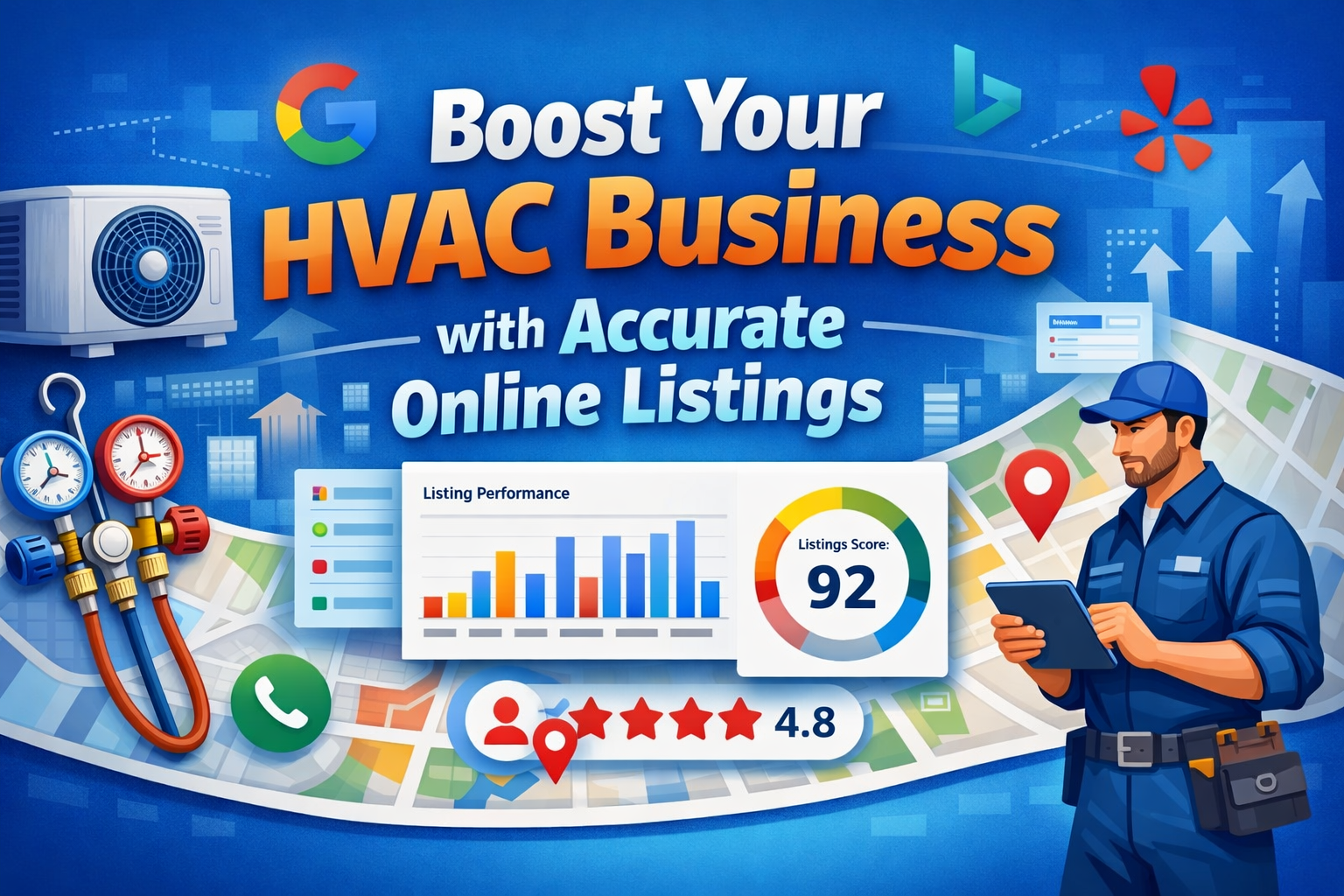
Why Accurate Online Listings Are a Game Changer for Your HVAC Business As an HVAC contractor, getting found online isn’t optional anymore — it’s essential. When homeowners search for “AC repair near me” or “furnace installation,” your business needs to show up with accurate, complete information across all the major directories to win that lead. One of the most impactful ways to improve your local visibility and attract more customers is through well-managed online listings and reporting. What Are Online Listings? Online listings are your business profiles across platforms like Google Business Profile, Apple Business Connect, Yelp, Bing Places and many industry-specific directories homeowners use to find HVAC services. These listings include your company name, address, phone number (NAP), hours, services offered and often customer reviews. Maintaining accurate listings helps you show up in local search results when potential clients are actively looking for HVAC help. Why HVAC Listings Matter More Than Ever Search engines use business listings to understand who you are and where you operate. Accurate, consistent listings across the web: Boost local SEO rankings because search engines trust consistent data. Connect customers quickly with up-to-date details like emergency service hours or new contact numbers. Increase credibility by showing reviews and complete business information. For HVAC contractors — where services are often urgent — listings can be the difference between a new job and a lost customer. The Power of Listings Reporting Simply having listings isn’t enough; you need to know how they perform. Listings reports help HVAC businesses analyze how customers find and interact with their profiles online. With reporting tools you can: Measure visibility and engagement like how many times your listings appeared and what actions users took (calls, clicks, directions). Check profile accuracy to ensure your hours, phone and services are correct everywhere. Track keyword rankings so you can optimize for HVAC-specific searches like “emergency AC repair” in your city. Compare performance over time to see what’s working and where to improve. This data allows you to make smarter decisions about where to invest your marketing efforts and how to optimize listings for more calls and bookings. Listings Score and Why It Matters Most reporting tools also give you a Listings Score, a snapshot of how strong your online presence is across platforms. A higher score means: More accurate information across directories Better local search rankings Higher trust from search engines and customers Improving your listings score over time should be part of your HVAC marketing strategy. Best Practices for HVAC Listings To get the most from your listings: Claim and verify your profiles on Google, Yelp, Apple and industry directories. Keep NAP consistent across all platforms — mismatches hurt your SEO. Use HVAC-specific keywords so your listings appear in relevant local searches. Encourage customer reviews and respond professionally. Monitor performance and update listings as your services or hours change. Conclusion  For HVAC companies looking to grow online and convert more local searches into real service calls, accurate and well-managed online listings are foundational. Combine them with regular performance reporting to track progress and continuously improve your visibility. That’s how you stay ahead in a competitive local market and make sure customers find your HVAC business first when they need help the most.
By Chris Smith April 4, 2026
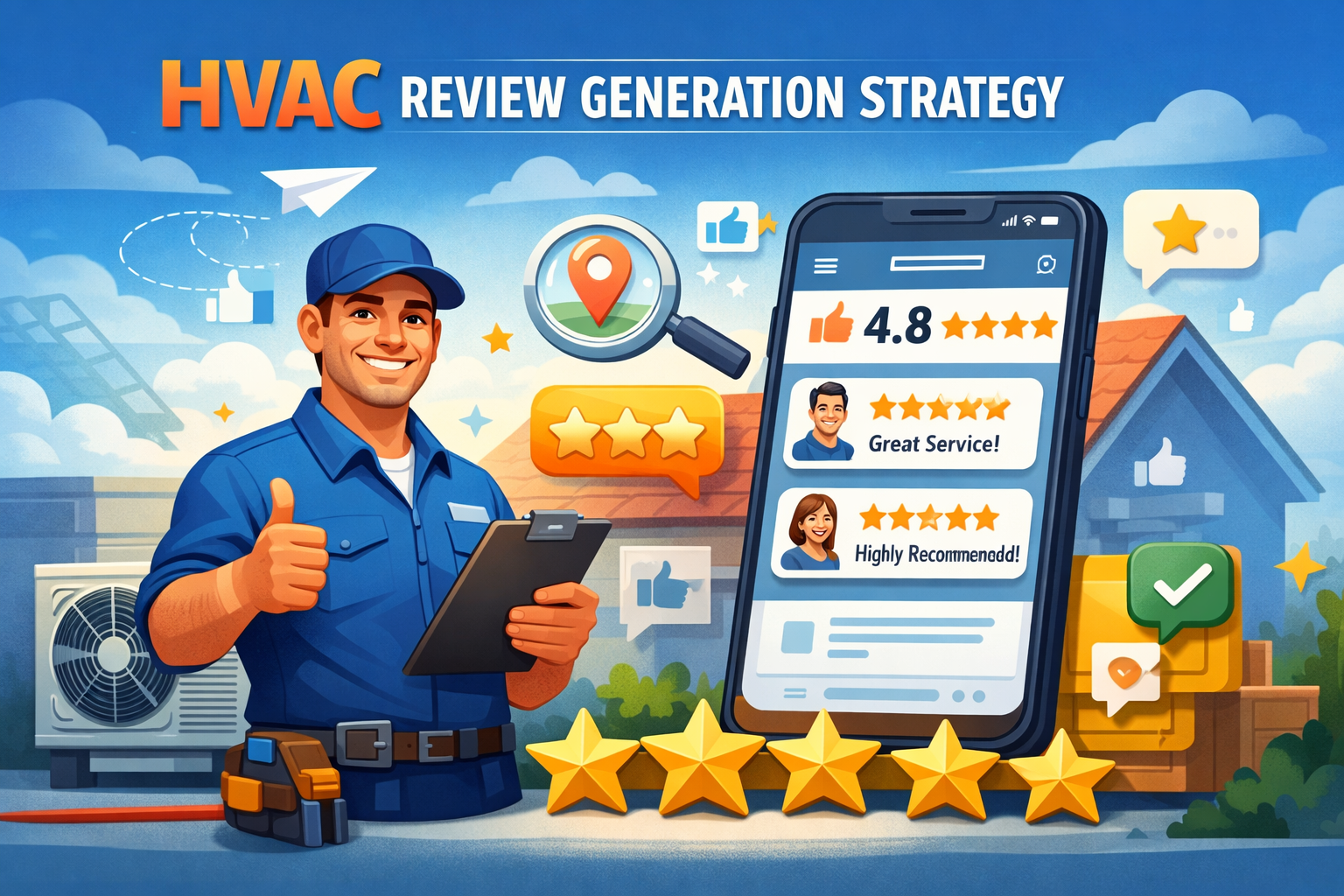
Why HVAC Businesses Need a Smart Review Generation Strategy Online reviews aren’t just nice to have for HVAC contractors — they’re essential. Today’s homeowners almost always check reviews before calling for service, installation, or maintenance. A strong review profile can improve your visibility in local search results, boost credibility, and directly drive calls and bookings for your HVAC business. What Is Review Generation? Review generation is the proactive process of asking customers to share their experiences with your HVAC services on public review platforms. Instead of waiting for feedback to come in randomly, you actively request it at strategic moments — like right after a service call or system install. By consistently generating reviews, you increase your business’s online presence and make it easier for future customers to find and trust you. The Impact of Reviews on Your HVAC Business 1. Boost Local Search Visibility Reviews are a major factor in local search rankings. Search engines like Google use review quantity and quality to determine how relevant your business is to people searching for HVAC services. More positive reviews can help you appear higher in the local “map pack” and organic search results. 2. Build Trust With Potential Customers Homeowners rely on reviews like personal recommendations. A strong collection of recent, positive feedback shows that your HVAC company consistently delivers great service — whether it’s a repair in a heatwave or a full system installation. 3. Drive More Leads and Conversions Businesses with larger review counts and higher ratings tend to get clicked and contacted more often. That means more calls, more booked jobs, and ultimately more revenue from your existing service efforts. A Step-by-Step Approach to Generating HVAC Reviews Step 1: Identify the Best Times to Ask Ask customers for a review when they’re most satisfied — for example, right after a successful tune-up, emergency fix, or installation. These moments are when homeowners are most willing to share positive feedback. Step 2: Make It Easy to Leave Feedback Provide multiple review options like QR codes, direct links via text or email, and buttons on your invoices or receipts that point to your Google Business Profile or Facebook page. The easier it is, the more likely they’ll leave a review. Step 3: Use Automated Follow-Ups Automating follow-up requests through review software saves time and ensures no opportunity is missed. Tools can send reminders at optimal times and tailor messages for each customer. Step 4: Respond to Every Review Responding to reviews — especially on Google — shows you care and helps reinforce trust with new prospects. Even negative feedback can be turned into a positive by acknowledging concerns and offering solutions. Tips to Maximize Your HVAC Review Strategy Choose the Right Platforms Google Reviews are usually the most impactful for HVAC companies because they heavily influence local search visibility. Facebook and industry-specific platforms can also be valuable. Encourage Honest Feedback Always aim for genuine reviews from real customers. Authentic feedback not only builds trust but also minimizes the risk of penalties from review platforms. Use Customer Service as a Review Opportunity Train your technicians to mention reviews during customer interactions. A simple ask like “If you’re happy with our service, a quick Google review helps our team a lot” can significantly increase review rates. Wrap-Up A thoughtful review generation system is one of the most effective marketing tools for HVAC businesses today. By actively collecting and managing customer feedback, you improve online visibility, build trust with new customers, and create a steady stream of leads — all while reinforcing your reputation as a reliable HVAC service provider.  Ready to take your HVAC business’s reviews to the next level? Start optimizing your review generation strategy today and watch your online presence grow.
By Chris Smith March 28, 2026
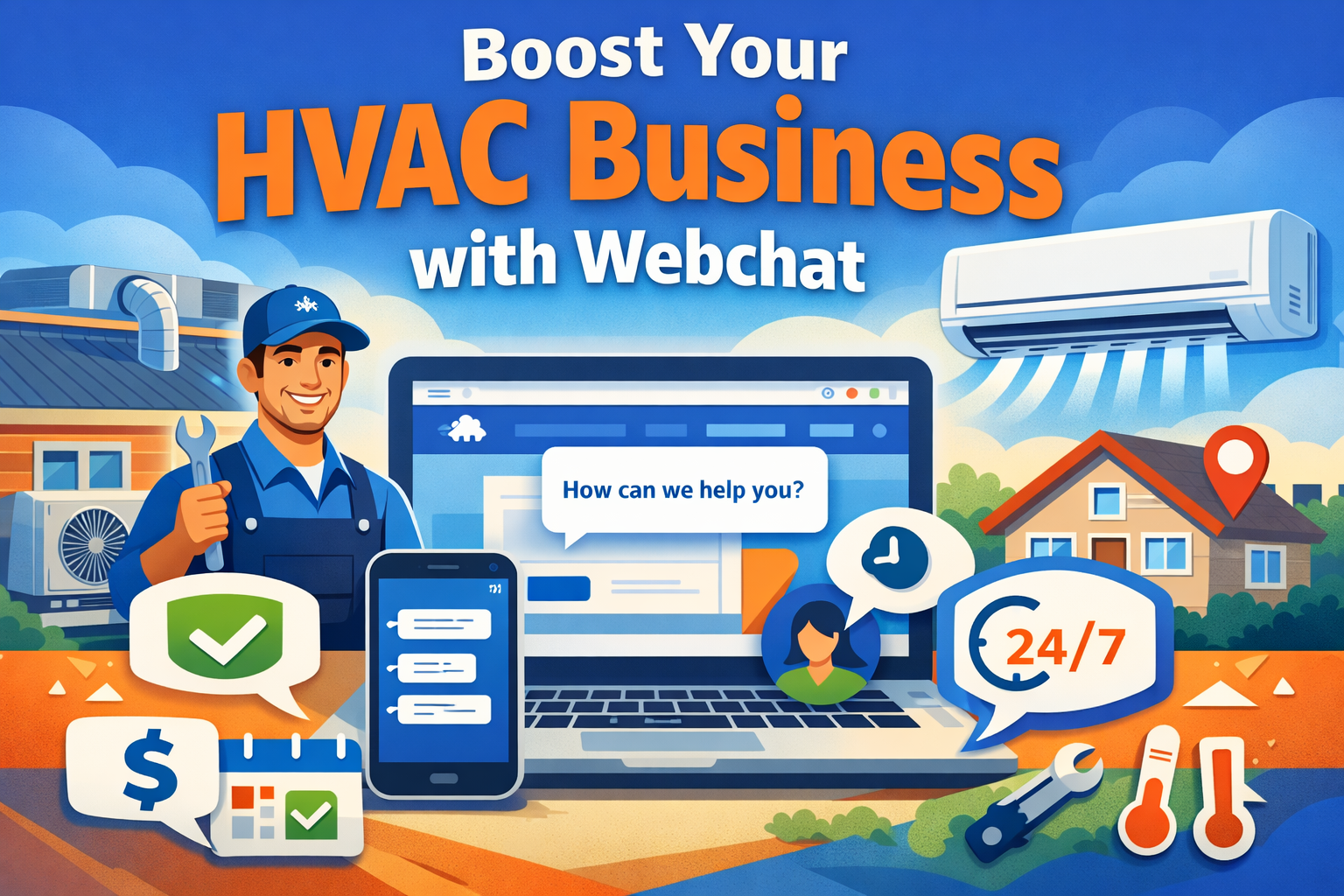
Why Your HVAC Business Needs Webchat on Your Website In today’s digital world, homeowners expect instant answers. When someone lands on your HVAC service website, they want fast responses — whether it’s a question about a repair, availability, or pricing. One of the most effective ways to meet that expectation is by adding a webchat widget to your site. Webchat lets visitors start a conversation immediately without calling or filling out a form. For HVAC companies that rely on quick conversions and strong customer service, this tool can have a big impact. Below, we explain what webchat is, how it works for an HVAC business, and why it’s an essential part of your customer engagement strategy. What Is Webchat? Webchat is a small chat box embedded directly into your HVAC website. When a visitor has a question, they can click the chat window and start a conversation. This can be done via: Live chat when someone on your team is online Automated chatbot responses when no one is available to answer immediately Unlike traditional contact forms, webchat captures interest in real time — meaning you can connect with leads while they’re still actively looking for help. How Webchat Benefits Your HVAC Business Capture More Leads Many potential customers won’t fill out a form or make a phone call if they have to wait. Webchat changes that by enabling visitors to reach out instantly. This reduces friction and increases the chance they’ll engage with your team. With webchat, every chat starts with the visitor’s contact information so you can follow up by text if needed — even after they leave your site. This turns casual visitors into qualified leads. Answer Questions Faster In the HVAC industry, homeowners often shop around before deciding. Quick answers about service availability, pricing, or maintenance plans can make the difference between booking an appointment with your company… or your competitor. Webchat helps you: Respond to questions immediately Automate answers to frequently asked questions Maintain conversations even outside normal business hours This leads to higher customer satisfaction and more booked jobs. Provide 24/7 Engagement Your HVAC customers don’t just visit your site during business hours. They might look for help early in the morning or late at night — especially during temperature extremes. With webchat, you can use a chatbot to respond to common needs around the clock. This means your business never misses a conversation, even when your team is offline. Make Your Website Work Harder Instead of waiting for visitors to submit forms or call, webchat makes your website interactive. It turns casual browsing into conversations that can lead to appointments. Plus, webchat messages route directly into a central inbox. This allows you to manage all customer interactions efficiently, whether it’s live chat or follow-up texting. Quick Tips for HVAC Webchat Success To make webchat most effective for your HVAC business: Customize your greetings to match your brand voice Add auto-responses for common HVAC questions (like pricing, emergency service, maintenance plans) Enable follow-up texting so you can reach out after initial contact Monitor and assign conversations quickly to keep response times low In Summary Website webchat is more than a convenience — it’s a lead conversion tool that helps HVAC businesses: Capture prospects before they leave your site Answer questions faster and more effectively Engage customers even when you’re offline Improve overall service experience and satisfaction  For a single-location HVAC company looking to grow leads and boost customer engagement, webchat can make a measurable difference.