Contractor Marketing: How to Market Yourself as a Local Expert

Michele Smith • March 13, 2023

As a local contractor, you know the ins and outs of your trade better than anyone. The question is, how do you convey that knowledge and experience to your target audience? 


You don’t want to just be an HVAC, Plumber or an Electrician – you want to be the go-to service provider in your community.


That’s why targeted contractor marketing is essential. With the right strategies, you can establish strong credibility and an even stronger local presence. From creating valuable content to using digital channels, there are many contractor marketing strategies capable of showcasing your expertise.


As you discover and implement the right marketing strategies, you’ll grow more leads and garner more local revenue for your business.

So, here are five ways to better market yourself as an expert contractor in your community.


1) Build Your Unique Brand


Let’s be honest – whether you’re an HVAC, Plumber or an Electrician technician or a landscaper, it’s not easy to distinguish yourself from the competition. With so many local contractors vying for the same jobs, standing out is essential. You can’t just be “another contractor” to your audience.


Start by highlighting feedback from real clients who have worked with you in the past. This establishes trust and shows potential customers that you are a reliable and trustworthy general contractor. If they know you’ve worked with their neighbors and co-workers, they’ll be more likely to remember you.


Almost all consumers read online reviews before contacting a service-based company, so it’s important to ensure that your testimonials are up-to-date and relevant. Additionally, more than 84% of people trust online reviews as much as personal recommendations. In short, having positive reviews from real customers is the key to building trust in the local market.


Here are some tips on obtaining testimonials that will help you establish a stronger identity within your area:


  1. Reach out to past clients and ask for their feedback about your services
  2. Make sure you get permission before using any testimonials
  3. Use social media platforms such as LinkedIn, Instagram, and Facebook to share your client’s success stories
  4. Ask customers to leave reviews on third-party sites like Yelp and Google
  5. Highlight customer reviews on your website or blog
  6. Create videos featuring customer success stories and post them on YouTube


2) Answer People’s Questions


As a local contractor, you have the opportunity to showcase your professional trade expertise through engaging and informative content. Provide genuinely helpful information to your audience via blog posts, videos, and social media posts.


Not only with this content endear your brand to local people in need, but it will also polish your reputation as a knowledgeable, trusted expert. 


Choose blog topics that are relevant to your industry, as well as topics that address common questions from potential customers or clients. If you’re a plumber, answer common questions about toilet clogs. If you’re an electrician, provide a list of electrical fire hazards people should avoid. 


Content marketing is a powerful tool for reaching a target audience and improving organic search engine rankings. With the right topics, you’ll drive more organic traffic to your website and increase your visibility on search engine result pages.


The bottom line: create content that markets your expertise but also provides real value to local searchers on the hunt for guidance. 


3) Build a Presence in Your Neighborhood 


Contractor digital marketing is extremely powerful, but don’t forget about building a presence in your local communities via more traditional avenues – newspaper ads, television commercials, billboards, etc.


Even in the age of TikTok and Yelp, local ads are still a critical part of any successful marketing strategy. Local ads allow businesses to target a specific geographic area with a personal touch, creating a strong sense of community involvement. 


As more people turn to digital platforms for their shopping needs, local ads also help businesses stand out from the competition. When someone desperately needs an AC repair, who are they more likely to actually recognize: the local team they see in their weekly newspaper, or the random company they found online 30 seconds ago?


Additionally, local ads are often cost-effective compared to other forms of advertising and can be used to drive sales quickly in a specific area. 


As a contractor, you’ll need to straddle the line of combining traditional and digital marketing strategies. Traditional advertising methods (such as direct mail, print advertising, and radio spots) help build customer relationships and recognition. On the other hand, digital tools (such as emails, social media campaigns, and online ads) help you expand your reach and widen your customer pool. 


4) Use Social Media as a Better Tool 


Social media is a great way for contractors to promote their business and increase their credibility. Platforms like Instagram, Facebook, and LinkedIn provide an easy platform to reach potential customers and build relationships with them. 


Through social media, contractors can also clearly showcase their work, highlight customer reviews, and provide helpful information. As a result, potential customers learn more about the contractor’s business and what they actually do. 


To garner even more credibility and community involvement, show pictures of real jobs you’ve completed and tag people you’ve worked with (if you have their permission). Make your services real to the people who find you on social media. 


Paid advertising campaigns are another great way for contractors to get in front of the right local demographic. These campaigns can be used to target specific customers in the area – like that neighborhood you know has frequent power problems or the part of town that experienced lots of hail damage. 


Paid advertising campaigns also offer the opportunity to measure success, as they provide detailed analytics that can help contractors determine their campaign’s efficacy. 


The Wrap-Up


Contractor marketing is an integral part of any local trade person’s business plan. You need a way to promote your services and gain visibility, and you can’t just go around knocking on all of your neighbors’ doors. 


By understanding the different types of contractor advertising, you can create an effective strategy and reach your target audience, thereby marketing yourself as a true local expert. 


We get it, though – all of this is easier said than done, especially when you’re busy running your own contracting business. 

That’s why we’re here to help. 


All Contractor Marketing® has years of experience working with all kinds of contractors – HVAC technicians, plumbers, electricians, you name it. Our team of professionals will help you create campaigns that actually drive conversions, based on data-driven insights and effective SEO strategies. 


With All Contractor Marketing® services in your corner, you can rest assured knowing that your marketing efforts are in good hands. Get started now to see how we can grow your trade business and solidify your market position!
By Chris Smith April 4, 2026
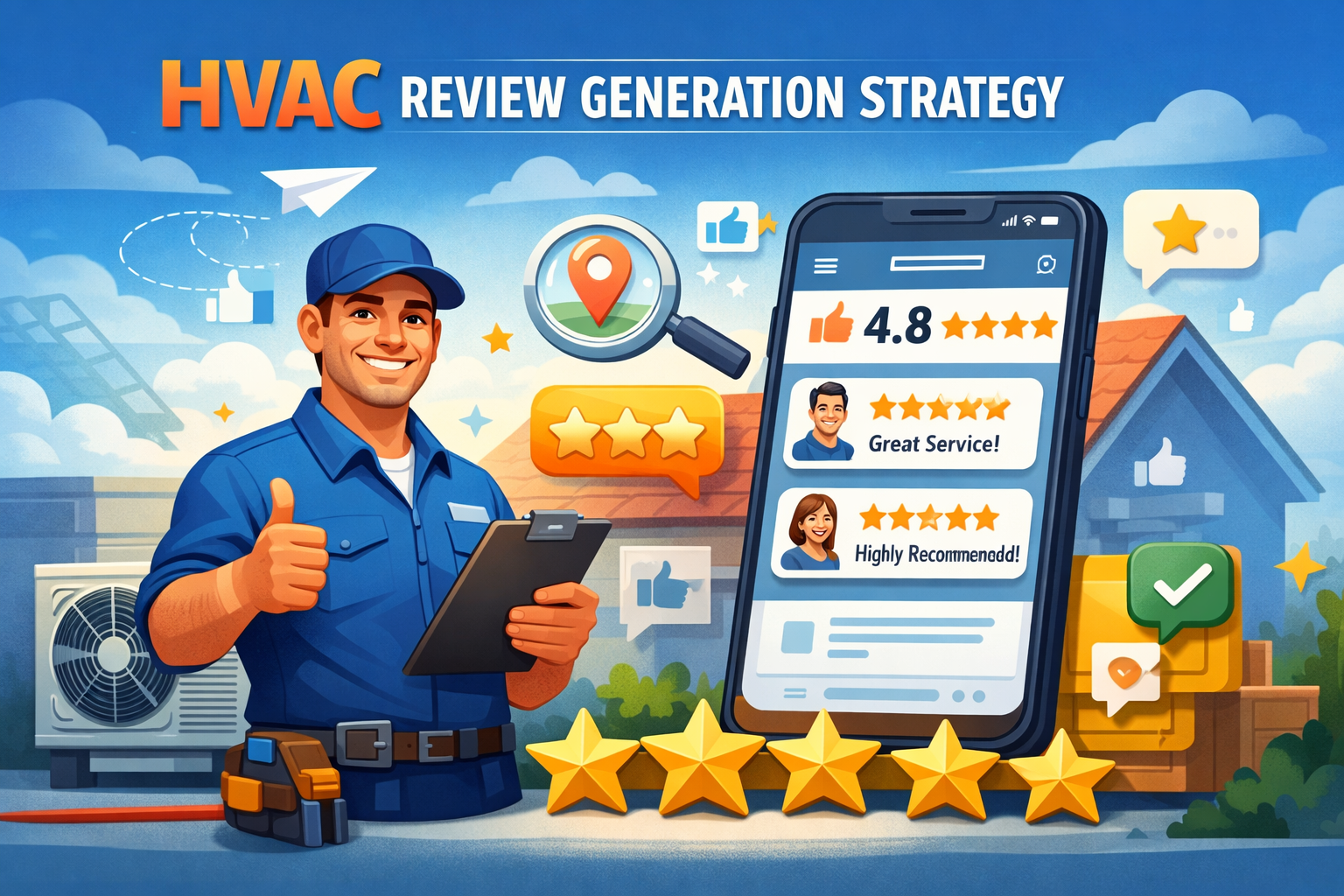
Why HVAC Businesses Need a Smart Review Generation Strategy Online reviews aren’t just nice to have for HVAC contractors — they’re essential. Today’s homeowners almost always check reviews before calling for service, installation, or maintenance. A strong review profile can improve your visibility in local search results, boost credibility, and directly drive calls and bookings for your HVAC business. What Is Review Generation? Review generation is the proactive process of asking customers to share their experiences with your HVAC services on public review platforms. Instead of waiting for feedback to come in randomly, you actively request it at strategic moments — like right after a service call or system install. By consistently generating reviews, you increase your business’s online presence and make it easier for future customers to find and trust you. The Impact of Reviews on Your HVAC Business 1. Boost Local Search Visibility Reviews are a major factor in local search rankings. Search engines like Google use review quantity and quality to determine how relevant your business is to people searching for HVAC services. More positive reviews can help you appear higher in the local “map pack” and organic search results. 2. Build Trust With Potential Customers Homeowners rely on reviews like personal recommendations. A strong collection of recent, positive feedback shows that your HVAC company consistently delivers great service — whether it’s a repair in a heatwave or a full system installation. 3. Drive More Leads and Conversions Businesses with larger review counts and higher ratings tend to get clicked and contacted more often. That means more calls, more booked jobs, and ultimately more revenue from your existing service efforts. A Step-by-Step Approach to Generating HVAC Reviews Step 1: Identify the Best Times to Ask Ask customers for a review when they’re most satisfied — for example, right after a successful tune-up, emergency fix, or installation. These moments are when homeowners are most willing to share positive feedback. Step 2: Make It Easy to Leave Feedback Provide multiple review options like QR codes, direct links via text or email, and buttons on your invoices or receipts that point to your Google Business Profile or Facebook page. The easier it is, the more likely they’ll leave a review. Step 3: Use Automated Follow-Ups Automating follow-up requests through review software saves time and ensures no opportunity is missed. Tools can send reminders at optimal times and tailor messages for each customer. Step 4: Respond to Every Review Responding to reviews — especially on Google — shows you care and helps reinforce trust with new prospects. Even negative feedback can be turned into a positive by acknowledging concerns and offering solutions. Tips to Maximize Your HVAC Review Strategy Choose the Right Platforms Google Reviews are usually the most impactful for HVAC companies because they heavily influence local search visibility. Facebook and industry-specific platforms can also be valuable. Encourage Honest Feedback Always aim for genuine reviews from real customers. Authentic feedback not only builds trust but also minimizes the risk of penalties from review platforms. Use Customer Service as a Review Opportunity Train your technicians to mention reviews during customer interactions. A simple ask like “If you’re happy with our service, a quick Google review helps our team a lot” can significantly increase review rates. Wrap-Up A thoughtful review generation system is one of the most effective marketing tools for HVAC businesses today. By actively collecting and managing customer feedback, you improve online visibility, build trust with new customers, and create a steady stream of leads — all while reinforcing your reputation as a reliable HVAC service provider.  Ready to take your HVAC business’s reviews to the next level? Start optimizing your review generation strategy today and watch your online presence grow.
By Chris Smith March 28, 2026
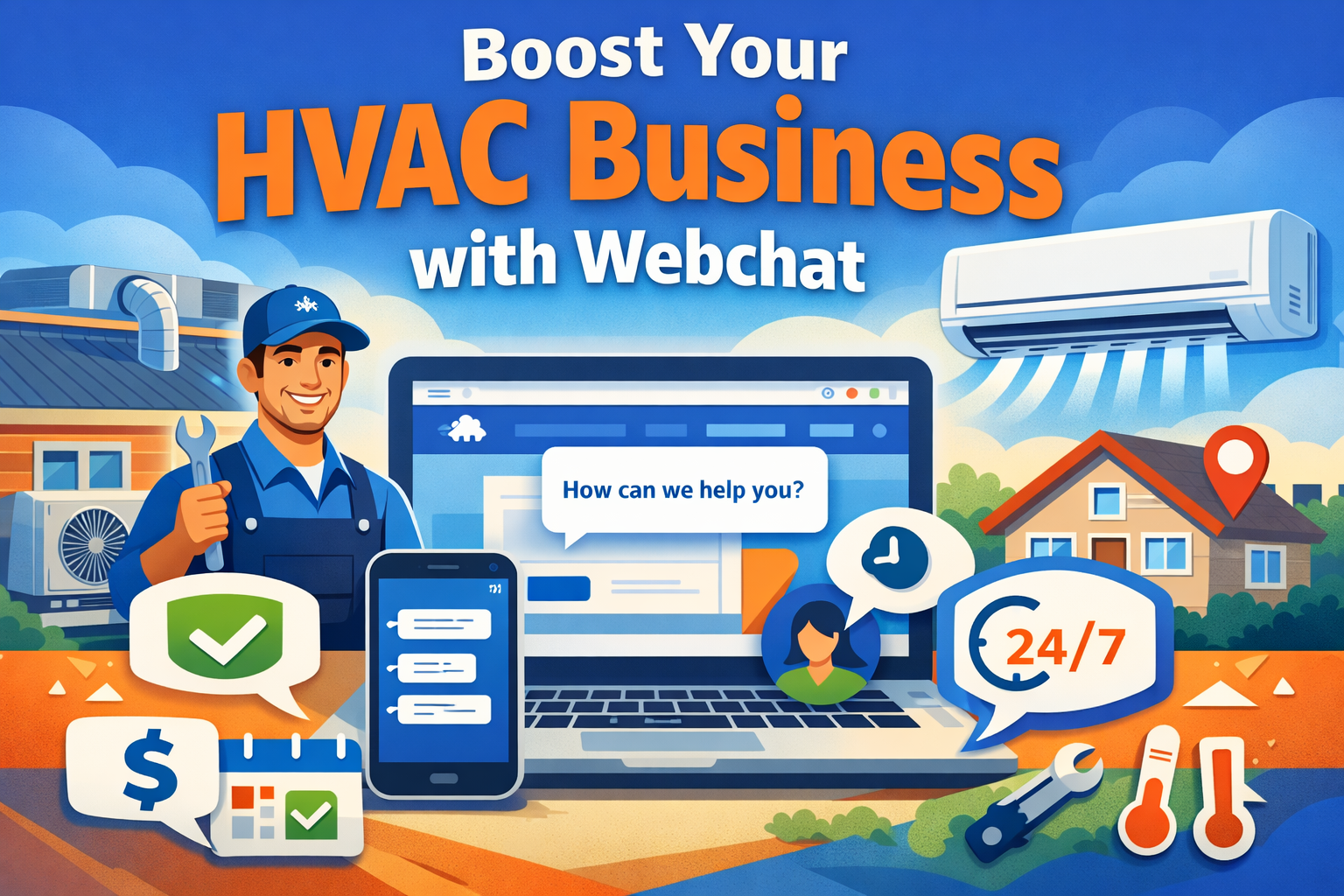
Why Your HVAC Business Needs Webchat on Your Website In today’s digital world, homeowners expect instant answers. When someone lands on your HVAC service website, they want fast responses — whether it’s a question about a repair, availability, or pricing. One of the most effective ways to meet that expectation is by adding a webchat widget to your site. Webchat lets visitors start a conversation immediately without calling or filling out a form. For HVAC companies that rely on quick conversions and strong customer service, this tool can have a big impact. Below, we explain what webchat is, how it works for an HVAC business, and why it’s an essential part of your customer engagement strategy. What Is Webchat? Webchat is a small chat box embedded directly into your HVAC website. When a visitor has a question, they can click the chat window and start a conversation. This can be done via: Live chat when someone on your team is online Automated chatbot responses when no one is available to answer immediately Unlike traditional contact forms, webchat captures interest in real time — meaning you can connect with leads while they’re still actively looking for help. How Webchat Benefits Your HVAC Business Capture More Leads Many potential customers won’t fill out a form or make a phone call if they have to wait. Webchat changes that by enabling visitors to reach out instantly. This reduces friction and increases the chance they’ll engage with your team. With webchat, every chat starts with the visitor’s contact information so you can follow up by text if needed — even after they leave your site. This turns casual visitors into qualified leads. Answer Questions Faster In the HVAC industry, homeowners often shop around before deciding. Quick answers about service availability, pricing, or maintenance plans can make the difference between booking an appointment with your company… or your competitor. Webchat helps you: Respond to questions immediately Automate answers to frequently asked questions Maintain conversations even outside normal business hours This leads to higher customer satisfaction and more booked jobs. Provide 24/7 Engagement Your HVAC customers don’t just visit your site during business hours. They might look for help early in the morning or late at night — especially during temperature extremes. With webchat, you can use a chatbot to respond to common needs around the clock. This means your business never misses a conversation, even when your team is offline. Make Your Website Work Harder Instead of waiting for visitors to submit forms or call, webchat makes your website interactive. It turns casual browsing into conversations that can lead to appointments. Plus, webchat messages route directly into a central inbox. This allows you to manage all customer interactions efficiently, whether it’s live chat or follow-up texting. Quick Tips for HVAC Webchat Success To make webchat most effective for your HVAC business: Customize your greetings to match your brand voice Add auto-responses for common HVAC questions (like pricing, emergency service, maintenance plans) Enable follow-up texting so you can reach out after initial contact Monitor and assign conversations quickly to keep response times low In Summary Website webchat is more than a convenience — it’s a lead conversion tool that helps HVAC businesses: Capture prospects before they leave your site Answer questions faster and more effectively Engage customers even when you’re offline Improve overall service experience and satisfaction  For a single-location HVAC company looking to grow leads and boost customer engagement, webchat can make a measurable difference.
By Chris Smith March 21, 2026
A Smart Marketing Blueprint for HVAC Contractors Marketing isn’t something you should do just because your competitors are. For HVAC businesses to grow consistently, you need a strategic plan backed by real goals, budgets, and measurable tactics — not knee-jerk decisions. Why You Need a Marketing Plan HVAC marketing works best when it’s proactive and repeatable , rather than reactive. A written annual plan gives structure to your campaigns, improves consistency, and helps you avoid wasting money on tactics that don’t deliver results. A basic plan should include: Your business goals for the year A timeline for achieving those goals Defined steps and channels you’ll use The metrics you’ll track to measure success A marketing budget aligned with your revenue Setting Your HVAC Marketing Budget One fundamental question every HVAC owner asks is: how much should I spend on marketing? A reliable benchmark for HVAC companies is to allocate 5%–10% of gross revenue toward your annual marketing efforts — aiming closer to 10% if you’re aggressively pursuing growth. Here’s how to think about this range: 5% of revenue works well if you’re focusing on maintaining steady lead flow 7%–10% of revenue is ideal when you want to expand service areas, boost seasonal demand, or outperform competitors Budgeting this way ensures you have enough funds to invest in the channels that drive quality HVAC leads without overspending. Core Components of an HVAC Marketing Strategy Once your budget is in place, it’s time to build your strategy around key areas that actually move the needle: 1. Brand Foundation Your brand is more than a logo — it’s the look, tone, values, and message your customers associate with your company. Consistent branding builds trust, which is especially important for homeowners choosing an HVAC provider. 2. Website That Converts Your website is the hub of all your digital marketing. Make sure it clearly answers: Who you are What services you offer How to contact you What offers you have (e.g., service plans or seasonal discounts) If you’re spending money driving traffic, but your site doesn’t convert visitors into calls or form submissions, you’re losing money. 3. SEO and Local Search Search Engine Optimization (SEO) helps your business show up when potential customers are searching for HVAC services online. Local SEO strategies like optimizing your Google Business Profile and gathering positive reviews can dramatically increase visibility. 4. Paid Digital Advertising Using targeted ads — especially Google Local Service Ads and paid search — gets your business in front of homeowners actively looking for HVAC help. These paid channels can deliver fast results when optimized correctly. 5. Customer Retention and Reviews Don’t ignore the customers you already have. Encourage reviews, promote maintenance plans, and communicate seasonally. Repeat business and referrals are often the most cost-effective sources of revenue. 6. Tracking and Optimization Whatever you spend, tracking results is vital. Use call tracking, analytics, and lead reporting so you know which channels are generating revenue and which ones are wasting cash. Optimization is how smart HVAC marketers maximize ROI. Final Thoughts  Successful HVAC marketing isn’t based on impulse buys or copying competitors. It begins with a clear plan, a realistic budget based on revenue, and a disciplined focus on activities that deliver measurable results . When you invest strategically — typically between 5% and 10% of gross revenue — and measure continually, you’ll improve lead quality, grow year-over-year, and stay ahead of the competition.